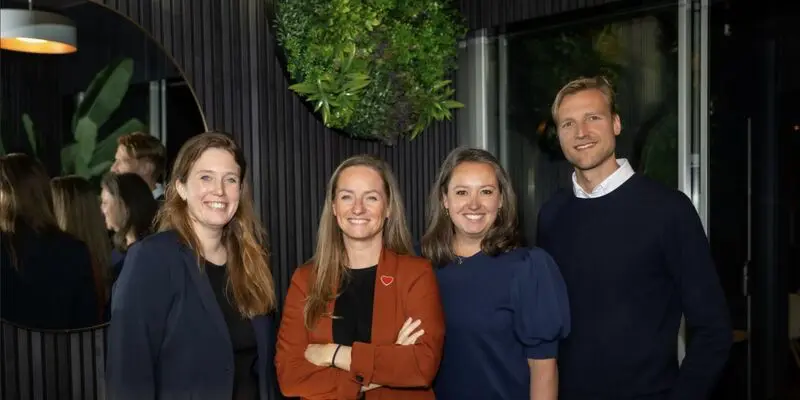
During a round table discussion organised by Hospitality Management, Temper's general manager David Gunneweg spoke with Daniëlle Plijnaar (Hotel Mitland), Inge Niekamp (Leonardo Hotels Benelux) and Marijke Vuik (KHN). One thing became immediately clear during the discussion: the question is not whether flexibility will remain, but who will organise it effectively.
The labour market in the hotel industry is undergoing fundamental changes. Labour shortages are increasing, work is becoming more fragmented, government policy can change quickly and have a direct impact, while technological acceleration requires organisations that can move with the times. In this context, flexibility is not a luxury, but a prerequisite for remaining agile.
At the same time, guests' expectations remain high and are changing faster than ever. This is forcing hotels not only to plan their work more intelligently for today, but also to organise it differently in a structural way. The figures underline this urgency: today there are four workers for every pensioner, but by 2040 that ratio will shift to two to one.
During the round table discussion, it became clear what this requires. Flexibility is no longer a stopgap solution, but a strategic design choice to structurally improve the organisation of work and allow more people to participate.
The conclusion was clear: the future of hospitality is not only about guest experience, but just as much about employee experience. And that starts with how the workplace is organised. Read on for all the insights from the round table discussion.
Structural shortages change everything
Staff shortages are now the starting point for many decisions in the hotel industry. Not because it is new, but because the figures show that this is a structural development that requires different choices. Today, there are roughly four workers for every pensioner. By 2040, that ratio will shift to two workers for every pensioner.
This means that hotels will have to operate structurally with a smaller pool of workers, while guests' expectations remain high and in many cases are even increasing. Moreover, those expectations are changing faster than before. In a society where work, parenting and informal care converge, guests consciously seek relaxation, tranquillity and meaningful contact in their free time.
Higher guest expectations in a smaller labour market
Demographic developments such as ageing, a growing group of consciously childless adults and cultural shifts are also leading to greater diversity in offerings and concepts, from adults-only hotels to a broader mix of cuisines and guest experiences.
This makes hospitality more complex. Expectations are rising, while affordability and operational efficiency are under pressure. As a result, staffing decisions do not stand alone, but are directly linked to the broader context in which hotels operate. The common thread in the discussion: no one is counting on a return to how things used to be.
Flexibility requires design, not improvisation
The discussion also made it clear that flexibility in the hotel industry is no longer primarily an ad hoc emergency solution to fill gaps, but a conscious choice within the staffing model. Permanent core teams ensure continuity, culture and security, and around them there needs to be room for a flexible shell that can cope with peak loads, seasonal work and unexpected absences. Flex workers are therefore not extra hands that you deploy on an ad hoc basis, but professionals who participate in an organised schedule – the flexible shell.
And this flexible deployment works best when people return more often and know the hotel, something you can achieve by working with a flex pool.
Legislation forces smarter organisation
An important part of the discussion also focused on legislation and enforcement. Since the lifting of the enforcement moratorium on the DBA Act, many hotels have experienced uncertainty about the deployment of self-employed workers. The Act is intended to clearly define the employment relationships between clients and self-employed workers, in order to promote fair competition in the labour market and prevent bogus self-employment.
Gunneweg recognises this uncertainty: ‘I can imagine that there is a lot of confusion. Misconceptions have been spread in the general news flow and the provision of information from the Tax and Customs Administration was somewhat slow to get off the ground, but organisations can still work with freelancers.’
The legislation is something to be designed from the outset. Not as a barrier, but as a framework. It still makes it possible to work with self-employed persons, as long as organisations adhere to the guidelines and carefully consider how work is organised.
“There are several key features of how Temper works that ensure that workers who use the platform can truly operate as self-employed individuals. Examples include the fact that assignments are limited to a single shift, workers can negotiate their rates and make frequent use of this option in practice, and that free replacement is possible. In addition, there is the 660-hour rule, which encourages freelancers to work as entrepreneurs and prevents them from becoming too embedded in an organisation," says Gunneweg.
Some hotels are nevertheless opting to take a cautious approach. ‘Because of this legislation, we have stopped working with all external companies. We don't want to take that risk, but you still need people you can call on from time to time to help out,’ says Plijnaar. At the same time, Gunneweg emphasises that it is important to look beyond black-and-white thinking: ‘It's not about one rule or one function, but about the whole picture. If you organise it carefully and transparently, the legislation offers more scope than is often thought.’
Technology as an accelerator of humanity
In addition to legislation, technology was also discussed. Although automation is often cited as the answer to staff shortages, the participants agreed on one thing: the hotel sector remains human at its core. However, recurring processes and administrative tasks are ideal for digitisation, which creates space for personal contact and service.
Labour shortages will further accelerate this development. Think of smart planning systems, data analysis and AI support for staff functions. Not to supplant the human aspect, but to reinforce it.
Smart data as management information for flexibility
Here, too, a platform can make a difference. ‘At Temper, we see how digitisation contributes to better-organised flexibility,’ says Gunneweg. ‘You can see at a glance what the strengths of freelancers are and how other clients rate their experience.’
This transparency works both ways: popular clients receive more applications per shift and often have to pay less to fill shifts. Places where people like to return are more successful in attracting flexible workers.
What this requires from hotels
Flexibility is not a stopgap solution, but a strategic part of the whole. By taking scarcity as a starting point, combining permanent teams with a consciously designed flexible shell, and incorporating legislation and technology into the design from the outset, space is created to continue to move in a changing labour market.
In this dynamic environment, Temper fulfils the role of a digital notice board where supply and demand come together. By making deployment visible, measurable and comparable, we help organisations learn more quickly what works in practice and to make their personnel policy future-proof, step by step.